
PowerFlex
PowerFlexAuto & Vehicles
4.7226.00 Reviews
- Version
- 4.5.15
- Installs
- 50.00K
- Age Rating
- Everyone
Screenshots
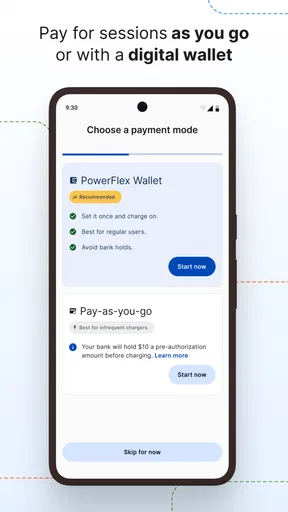
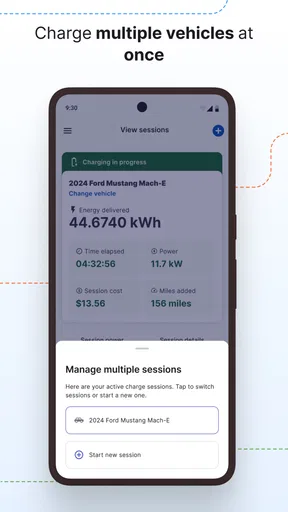
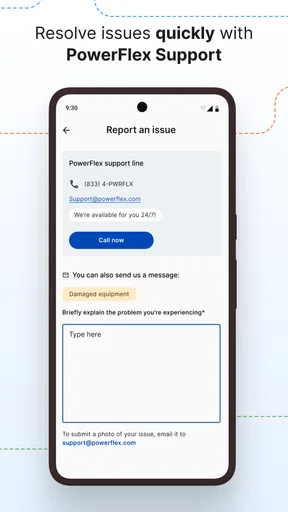
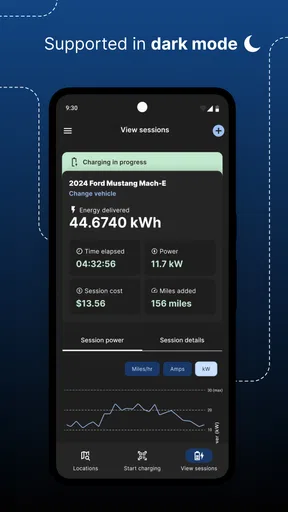
Our Review of PowerFlex
 Analysis by Appyee
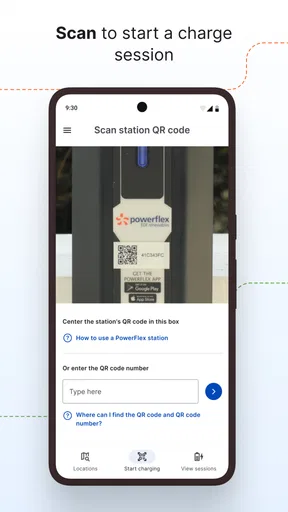
PowerFlex is the kind of electric-vehicle charging app that makes sense only when it connects neatly with the places I already drive to. It is free, aimed at everyone, and developed by PowerFlex, but the real question is not whether it looks useful on the first day. The better question is whether it continues to save me effort after the novelty disappears. In my experience, that depends less on the app itself than on how often I encounter PowerFlex Adaptive Charging Stations during normal routines.
The app belongs in the Auto & Vehicles category and focuses on smart charging rather than trying to become a general-purpose driving companion. That narrow purpose is a strength. I do not open it expecting trip planning, vehicle maintenance, or a social feed. I open it when I need to deal with charging, and that makes its value fairly easy to judge: can I find the relevant station, understand what is happening, and get back to my day without unnecessary friction?
What using PowerFlex feels like beyond the first week
The first-week appeal comes from having a single place to manage charging at supported PowerFlex locations. A new electric-car owner can quickly see why an app like this is useful. Instead of treating every charging stop as an unfamiliar process, I can build a repeatable habit around the same tool. That matters particularly for workplace, residential, campus, or other routinely visited locations where the charger is part of an ordinary schedule rather than a one-off road-trip stop.
That said, the app should not be judged as a universal key for every charger I might encounter. Its usefulness is tied to the PowerFlex network and the stations that work with it. If most of my charging happens at home, or if I regularly use several unrelated charging networks, I would still need other tools or payment methods. PowerFlex can simplify one part of the routine without replacing the entire charging ecosystem.
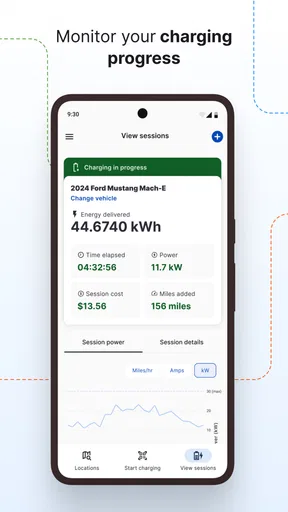
My most practical first-use scenario would be a weekday commute. I arrive at a familiar parking area, connect the car, and use the app to handle the supported charging session rather than searching through several network apps. When I return later, the app is valuable if it gives me enough clarity to know whether the session is active or finished. The benefit is not excitement; it is removing a small repeated task from an already busy day.
One useful habit is to open the app before plugging in, especially at a location I have not used recently. That gives me a chance to confirm that I am working with the right station and not relying on memory from a previous visit. I also prefer checking the session after connecting instead of assuming that a visible cable means charging has started. This simple pause can prevent the frustrating discovery that the car sat parked without receiving power.
The interface is most valuable when I treat it as a confirmation tool, not just a start button. Charging has several points where confusion can happen: the wrong space, an incomplete connection, a session that has not begun, or a car that is ready but not actually receiving energy. A careful glance at the app after starting creates a useful checkpoint. It is a small detail, but it is the kind of detail that determines whether an app earns a permanent place on my phone.
PowerFlex has a 4.7 average from around 1.1 thousand ratings, which suggests that many users find the basic experience dependable enough to keep using. I would not take that figure as a promise that every station visit will be smooth, because charging reliability also depends on the vehicle, the location, the connection, and the station itself. Still, it is a reassuring sign for someone deciding whether this network-specific tool is worth trying.
The recurring value is strongest when charging is part of a routine
After the first few uses, the question changes from “Can I start a session?” to “Does this save me time every month?” For a driver who repeatedly visits PowerFlex locations, the answer can be yes. Familiarity reduces the mental load of remembering which app belongs to which charger. The app becomes a practical piece of a commute, a residential parking routine, or a regular visit to a location with supported charging.
The strongest long-term use case is predictable charging. If I park in the same place several times a week, I can develop a simple sequence: arrive, connect, open PowerFlex, verify the station, start or confirm the session, and leave. That sequence is more important than any single screen. A charging app earns lasting value when it supports a behavior I can repeat without having to relearn the process each time.
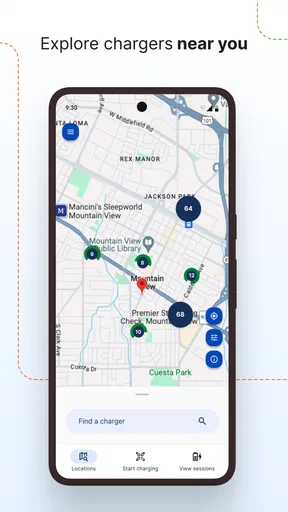
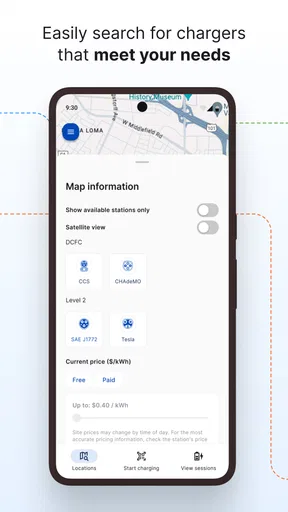
There is also a useful distinction between an app that helps me locate a charger and one that helps me manage a charging stop. A general map may be better for discovering options across many networks, while PowerFlex is more relevant once I am dealing with a supported station. I would use a broad navigation or charging directory for planning an unfamiliar journey, then rely on PowerFlex when the actual station belongs to its network. That combination is more realistic than expecting one app to do everything equally well.
For apartment residents or employees who share charging areas, the app’s value can be tied to coordination rather than exploration. I may not need it every day, but I need it to work on the days when charging access matters. In that situation, the app is less about entertainment or convenience in the usual sense and more about making a limited resource easier to use. The recurring benefit comes from reducing uncertainty around a task that affects the next drive.
A less obvious point is that I would keep the app’s role separate from the car’s own battery information. The vehicle remains the better place to understand battery level, estimated range, and charging limits. PowerFlex is better treated as the network-facing part of the process. Keeping those roles clear prevents me from blaming the app for information that belongs to the vehicle or expecting the vehicle display to explain a network session.
The app has passed beyond its early release and is currently at version 4.5.15, with support for devices running Android 8.0 or later. That broad compatibility is helpful for people who keep a phone for several years rather than upgrading frequently. It also means I can consider it as a practical utility instead of an app reserved for the newest devices. For iPhone users, the same decision still comes down to whether their regular charging locations are part of the PowerFlex experience.
Maintenance is light, but the charging routine still needs attention
PowerFlex itself is free, so the everyday cost is not a subscription decision. The maintenance burden is mainly behavioral: keeping the app available, allowing myself enough time to confirm a session, and remembering that the app cannot correct every physical or network problem at a station. I would not describe that as demanding, but it is more than installing the app once and forgetting it exists.
I recommend checking for updates when the app behaves strangely, particularly after a phone operating-system change. I also make sure my phone has enough battery before relying on it at a charging stop. This is not a special PowerFlex feature; it is simply good practice for any app involved in starting or monitoring a vehicle charge. A dead phone at the wrong moment can turn a straightforward stop into an avoidable hassle.
Another maintenance habit is cleaning up my own expectations. I would not assume that every station shown through a network app will be available exactly when I arrive. A charger can be occupied, inaccessible, or affected by a local issue. The app can be part of the decision, but the parking area and the physical equipment still determine the outcome. I find that this mindset makes the tool more useful because I use it for confirmation rather than treating it as an absolute guarantee.
When a session does not behave as expected, I would first check the physical connection and the vehicle’s charging state, then inspect the app. That order is practical because a loose connector or car-side setting can look like an app failure. If the problem remains, I would record the station details and what happened before trying again or seeking support. This creates a clearer troubleshooting trail than repeatedly tapping the same control without knowing whether the issue is software, hardware, or access-related.
One trade-off is that a network-specific app can create phone clutter. Drivers who already have several charging applications may hesitate to add another one. I understand that concern. My solution would be to keep PowerFlex if I regularly use its stations, but avoid treating it as my only charging reference. If I rarely encounter PowerFlex equipment, the app may not deserve a prominent place on my home screen, even though its free price makes trying it low-risk.
Where fatigue appears after the novelty fades
The main source of fatigue is repetition without added context. If every visit requires opening the app, finding the correct station, and checking the same information, the process can feel like an extra chore compared with home charging or a charger that integrates directly into the car’s normal controls. That does not make PowerFlex poor; it simply shows that convenience depends on the environment in which I use it.
Another possible frustration is switching between tools. I may use the car’s navigation for directions, a general charging map for route planning, and PowerFlex for a supported session. Each tool can be useful, but the handoff between them is not completely seamless. For occasional drivers, that may be acceptable. For people who make frequent long-distance trips across different networks, a broader charging platform could feel more efficient as a planning companion.
I would also be cautious about relying on a charging app while rushing. The app may be simple enough for ordinary use, but hurried decisions are where mistakes happen: selecting the wrong station, walking away before confirming the session, or forgetting the car is still connected. My best experience comes when I build a few seconds of verification into the stop. That is a small cost, but it is worth acknowledging because not every user wants another digital step in a task that should feel automatic.
The app is not the right choice for someone who expects detailed ownership tools. If my priority is battery-health analysis, service reminders, driving statistics, or a complete route planner, I would look to the car manufacturer’s application or a broader EV platform. PowerFlex has a clearer purpose. Its focused design is useful when that purpose matches my need, but it also means I should not install it expecting a full command center for the vehicle.
Its age rating is Everyone, which fits the straightforward utility-oriented role. I would still explain the charging workflow to a new driver rather than assuming the rating means the process is self-explanatory. The important learning is not complicated: identify the correct supported station, connect properly, confirm that charging has begun, and check the session before leaving the car. Once those steps become automatic, the app demands much less attention.
Who will keep it installed, and who probably will not
I would recommend PowerFlex to an EV driver who regularly parks at PowerFlex Adaptive Charging Stations and wants one familiar way to handle those sessions. It is also a sensible trial for a new electric-car owner who has just discovered that a workplace, residence, or frequently visited destination uses this network. The free download removes the biggest barrier to testing it, and the app’s focused purpose makes it easy to decide whether it belongs in a daily routine.
I would be less enthusiastic for a driver whose charging is almost entirely done at home. In that case, the app may sit unused for long stretches, and the car’s own controls may already cover the important tasks. I would also hesitate to recommend it as the only app for someone who travels widely and needs one place to compare many unrelated networks. PowerFlex can complement a broader tool, but it is not a substitute for every charging service.
The install base is over 50 thousand, and there are around 226 written reviews alongside the wider rating activity. Those figures show that the app has an established audience without making it a universal standard for every EV driver. I see that as a useful middle ground: there is enough adoption to make the product feel established, but I would still base my decision on my actual charging locations rather than popularity alone.
For a practical test, I would install it before the next visit to a known PowerFlex station, sign in if needed, and use it during a normal—not rushed—charging stop. I would then ask three questions: Did I find the correct station without confusion? Did I know that charging had actually started? Did the app make the stop easier than the alternative I normally use? If the answer is yes repeatedly, it has earned a place on my phone. If not, keeping it installed only because it might be useful someday is unnecessary.
My long-term verdict on PowerFlex
PowerFlex earns lasting value through repetition, not novelty. I like it best as a dependable network-specific utility that supports a charging habit at places I already visit. It is free, broadly accessible on older Android devices, and focused enough that I do not have to navigate unrelated vehicle features. The developer, PowerFlex, has kept the app active through its current version, which supports the impression of an ongoing product rather than a forgotten installation.
My balanced view is that the app can remove friction, but it cannot remove the realities of public or shared charging. I still need to pay attention to the physical station, the car, the parking situation, and the possibility that a charger may not be convenient at a particular moment. Users who understand that boundary are more likely to appreciate the app. Users expecting a universal EV dashboard may find it limited.
The deciding factor is simple: install it when PowerFlex stations are part of your real routine, not merely because you drive an electric car. In that situation, the first-week appeal can become month-to-month usefulness, and the small maintenance habits feel worthwhile. If your charging life is home-based or spread across many unrelated networks, a different tool may serve you better. For the right driver, though, PowerFlex is a sensible, focused companion that can remain useful long after the initial installation.
Verdict
Strengths of PowerFlex
- Simple interface makes workouts easy to start and follow.
- Supports strength-focused routines for different fitness levels.
- Useful for tracking progress and maintaining training consistency.
- Exercise guidance can help beginners learn basic movements.
- Suitable for home workouts with minimal equipment.
Limitations of PowerFlex
- Some features or workout plans may require a paid subscription.
- Exercise variety may feel limited for advanced athletes.
- Progress tracking may depend on manually entering workout data.
- Personalization may not match the depth of dedicated coaching apps.
- Requires regular motivation, as it may not provide live trainer support.
Similar Picks in This Category
View All
Android Auto
Google LLC4.1

maxim — order a taxi & food
PT. SITO4.7

Штрафы ГИБДД: проверка с фото
Pays LLC – Штрафы ГИБДД4.7

Номерограм – проверка авто
Авто Ассист4.8

Дром Авто
Дром4.9

Frequently Asked Questions
What is PowerFlex and what can I use it for?
PowerFlex is generally presented as a fitness and workout application designed to help users organize exercise routines, monitor progress, and stay consistent with their training goals. Depending on the version available on your device, it may include guided workouts, strength-training plans, exercise instructions, activity tracking, and motivational features. Before downloading, check the current app description to confirm which tools and training programs are included.
Is PowerFlex suitable for beginners?
PowerFlex can be useful for beginners if the available routines include clear instructions, adjustable difficulty levels, and gradual progression. New users should start with low-intensity exercises, learn the correct form, and avoid increasing weight or workout duration too quickly. The app should be treated as a training aid rather than a replacement for professional guidance, especially if you have an injury, medical condition, or limited exercise experience.
Does PowerFlex require a subscription or include in-app purchases?
PowerFlex may offer a combination of free features and premium content, such as advanced workout plans, personalized programs, progress reports, or additional exercise libraries. Pricing and subscription conditions can vary by platform, country, and promotional offer. Before confirming a purchase, review the billing frequency, trial terms, renewal policy, and cancellation instructions shown in the Google Play Store or Apple App Store.
Can I use PowerFlex without gym equipment?
The answer depends on the workout library provided in the version you install. Many fitness apps include bodyweight routines that can be performed at home, while other plans may require dumbbells, resistance bands, machines, or other equipment. Review the exercise requirements before starting a program. If an alternative exercise is available, choose one that matches your space, equipment, fitness level, and safety needs.
Does PowerFlex track personal data and workout progress?
PowerFlex may collect information related to account details, workout activity, goals, device usage, or progress tracking, depending on the features you use and the permissions you grant. Read the app’s privacy policy before creating an account, particularly if it connects with health or fitness services. Also check whether your data can be exported or deleted, and only enable permissions that are necessary for the app’s functions.
